Linear, gantt chart style project schedules are not always easy to read for people without a building or project background.
This interactive data visualisation provides an alternative project...
-
 View projectSharks range in size from the largest fish on the planet to the length of your palm. See how you compare to some of these vulnerable predators that are so crucial to the ocean's health.
 -
 View projectThe visualization shows the collection of historical drawings by Frederick William IV alongside a thematic and temporal arrangement. The aim was to highlight thematic and historical connections...
 -
 View projectHow much money exists in the world? Strangely enough, there are multiple answers to this question, and the amount of money that exists changes depending on how we define it. The more abstract...
 -
 View projectAn interactive map of what daylight and darkness look like in most of the United States over the course of a year.
 -
 View projectEnglish has words from all over the world but come from three main sources: Germanic, Old French, and Latin and Greek. This visualisation color codes text based on word origins.
 -
 View projectEach number capable of factorization (2–101) is factorized to its primes. Each prime factor is represented by a ring of "leaves" around a center point colored with a light-to-dark gradient....
 -
 View projectDiagrams of daily wind and temperatures during one year for the most populated city in each state. Colorful diagrams display five daily measurements for an full year in each city: wind direction,...
 -
 View projectMapInSeconds lets people create choropleth maps just by copying and pasting data from a spreadsheet/Excel. A major goal of this is to make map-making straightforward and accessible. The maps can...
 -
 View projectDawes’s work, Cinema Redux, inspired us to take a serious look at how one would go about quantifying the amount of ‘redness’ that pervaded the Chinese media. Would the resulting outcome help to...
 -
 View projectTake a 360 degree virtual tour of our Solar System, with the help of astronomer and Crash Course host Phil Plait! From start to finish, the viewer is guided through from Planet to Moon to Meteor,...
 -
 View projectA century ago The Netherlands counted 6.5 million inhabitants. On March 21st of this year that number officially reached a total of no less than 17 million. That same day we published a combination...
 -
 View projectGENDER GDP/GAP attempts to communicate the stark contrast between the economic dynamism of world’s richest countries’ and the unequal political representation that has characterised it, since 1960.
 -
 View projectBig data gets all the glory, so I set out to explore data of a much smaller and more personal nature. Little Data is an ongoing series of data visualizations based on hand-collected personal data...
 -
 View projectA series of three interactive and animated visualizations that show the uncertainty of life at both the individual level and the population as a whole.
 -
 View projectElementary school: The folded leaflet shows the educational pathways of pupils between kindergarten and secondary school level II between 2001 and 2014. A distinction is drawn between different...
 -
 View projectThe analysis of collaboration patterns both between institutions and among countries. Scientific collaborations play an increasingly important role in driving world-leading research. Nature...
 -
 View projectThis is a visualization of the Republican primary elections in 2016. In this elections, each state has its own system of dividing delegates over candidates. This visualization allows to experiment...
 -
 View projectI spent a week on the couch with Tarantino’s oeuvre, watching people die and swear a blue streak. When someone was killed by a gun or a sword or a venomous snake, or someone was called a...
 -
 View projectThis project visualises the 1165 journeys women made to seek refuge in London between 1st April 2015 and 31st March 2016. It illustrates how far and wide women migrate across London boroughs when...
 -
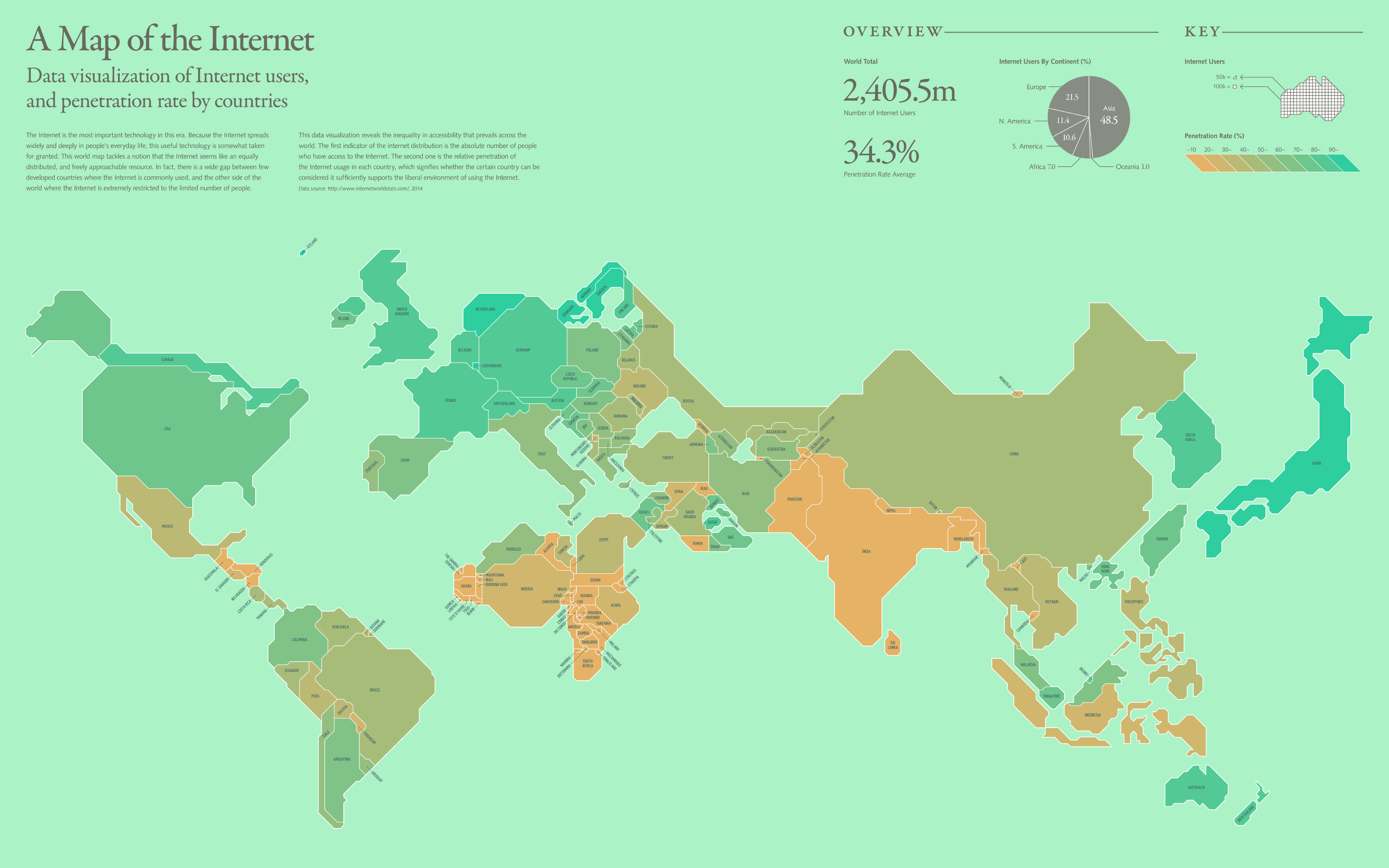
 View projectThe Internet is the most important technology in this era. Because the Internet spreads widely and deeply in people's everyday life, this useful technology is somewhat taken for granted. This world...
 -
 View projectMost movies make the majority of their profits in the first few weeks after release. A nomination for the Oscars could change this dynamic dramatically, but only for some. The nomination puts...